
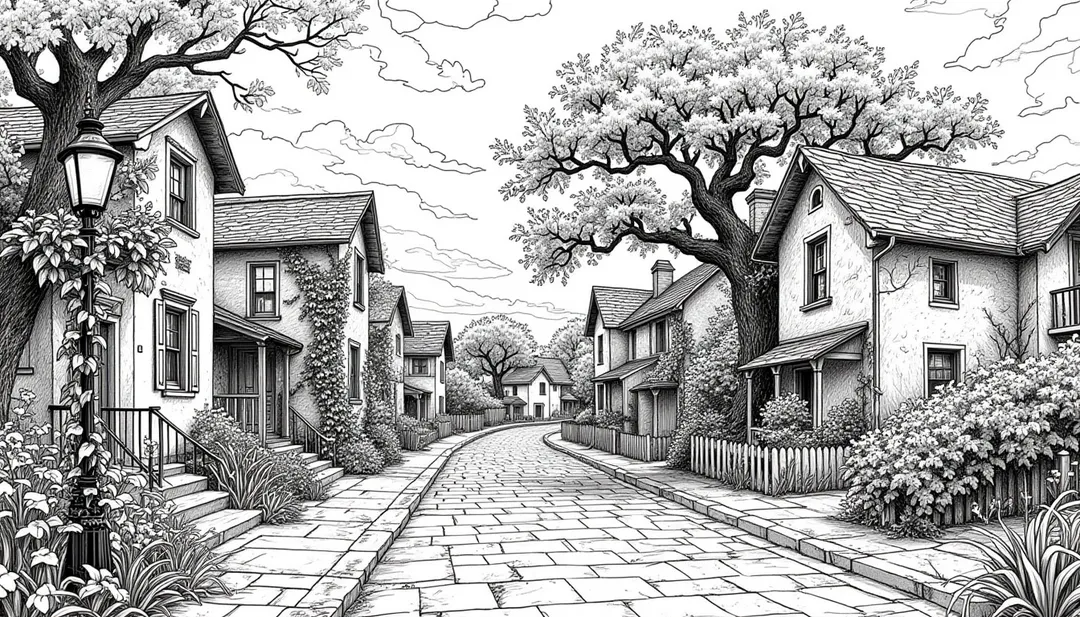
AI-generated coloring pages have completely transformed the way families and artists approach the simple joy of putting color to paper. I remember a particularly grey Saturday afternoon when my young nephew was absolutely determined to color a picture of a “robot giraffe eating a slice of pepperoni pizza while riding a skateboard.” We checked every coloring book in the house and scrolled through endless pages of stock images online, but nothing quite matched his oddly specific vision. That was the moment I realized that the traditional, static coloring book was no longer enough for the boundless imagination of a child.
By simply typing a few descriptive words into an AI image generator, we were able to manifest that exact scene in seconds, complete with thick black outlines and plenty of white space for markers. The look of pure amazement on his face was worth more than a thousand pre-printed books. This is the true heart of the digital art revolution. It is not about replacing the physical act of coloring, but rather about removing the barriers between a creative thought and the physical page.
The technology behind AI-generated coloring pages relies on sophisticated machine learning models that have been trained on millions of artistic examples. These systems, like Midjourney, DALL-E 3, or Stable Diffusion, understand the fundamental elements of line art. They know that a coloring page needs to have high-contrast borders, minimal shading, and clear, enclosed areas that can easily be filled with wax, ink, or digital paint. For the user, it feels like having a professional illustrator on standby, ready to sketch any whim or wonder that crosses your mind at any hour of the day.
This level of customization is what makes these digital tools so addictive and useful for such a wide range of people. Parents can create personalized stories where their children are the main characters in fantastical worlds. Teachers can generate specific diagrams or historical scenes that perfectly align with their current lesson plans without spending hours hunting for the right copyright-free image. Even professional artists are using these tools to generate complex “under-drawings” or patterns that they can then refine and color by hand as a form of meditation or skill-building.
The Educational Power of AI-generated coloring pages
From an educational standpoint, the rise of AI-generated coloring pages offers a unique opportunity to teach children about prompt engineering and the basics of artificial intelligence. When a child asks for a picture and sees how different words change the outcome, they are learning the importance of descriptive language and specificity. If they ask for a “dog,” they get a generic canine. But if they ask for a “fluffy corgi wearing a detective hat in a misty forest,” they see the direct correlation between their vocabulary and the visual result.
Coloring itself has always been a staple in early childhood development because it helps refine fine motor skills and hand-eye coordination. By using AI-generated coloring pages, we can keep children engaged longer because the subject matter is something they actually care about. A child who loves both dinosaurs and ballet might not find a traditional book that caters to that specific intersection. However, with AI, they can have an entire series of ballerinasaurus illustrations to keep them practicing their grip and stroke control for hours on end.
Furthermore, these custom pages can be used to introduce complex concepts like color theory or cultural history in a way that feels like play. An art teacher could generate a series of images in the style of famous artists like Van Gogh or Picasso, but with modern subjects that interest students. Imagine coloring a “Starry Night” version of a local park or a Cubist interpretation of a video game character. This allows students to engage with art history on a tactile level, breaking down the intimidation factor of “high art” and making it accessible and fun.
Special education teachers have also found immense value in these tools because they can create sensory-friendly images. Some children with autism or sensory processing disorders may find busy, overly detailed coloring pages overwhelming. With AI, a teacher can specifically request “minimalist coloring pages with thick lines and large simple shapes” to accommodate a student’s specific needs. This level of personalized accessibility was virtually impossible when relying on mass-produced books that are designed for the “average” user.
Stress Relief and Mindfulness with AI-generated coloring pages
The trend of adult coloring books has been booming for years, but AI-generated coloring pages take this therapeutic practice to a whole new level. For many adults, coloring is a way to disconnect from the digital noise and enter a state of flow. The repetitive motion of coloring can lower the heart rate and reduce cortisol levels, acting as a form of “active meditation.” By using AI to generate your own pages, you can tailor the complexity of the art to your current stress level.
If you have had a particularly long and exhausting day, you might want a page with large, flowing mandalas or simple botanical patterns that don’t require much mental processing. On other days, when you feel the need for a more immersive escape, you can generate incredibly intricate architectural scenes or complex steampunk mechanical designs. The ability to choose your own challenge makes the therapeutic benefits much more effective. It becomes a personalized wellness routine that adapts to your mental state in real-time.
There is also a deep sense of creative ownership that comes with AI-generated coloring pages. Even if you didn’t draw the lines yourself, you were the architect of the concept. You chose the theme, the style, and the composition through your prompts. This “co-creation” process provides a sense of accomplishment that pre-made books simply cannot match. It bridges the gap for people who feel they lack the technical skill to draw but still have a strong desire to create something beautiful and unique.
I have spoken to several retirees who have taken up this hobby as a way to keep their minds sharp and their hands active. They enjoy the challenge of learning how to interact with the AI, and they find great satisfaction in printing out their creations to share with friends or family. It provides a digital-physical hybrid hobby that encourages lifelong learning and provides a creative outlet that is both low-cost and infinitely varied. It turns a solo activity into a conversation piece that can be shared across generations.
How to Create High-Quality Pages Using AI
Generating a great coloring page isn’t just about asking for a subject; it’s about understanding the “language” of the AI. To get the best AI-generated coloring pages, you need to use specific keywords in your prompts. Words like “line art,” “black and white,” “contour,” “bold outlines,” and “coloring book style” are essential to ensure the AI doesn’t try to add shading, textures, or colors that would make the page difficult to work with. You want to aim for high contrast and clear boundaries between the different elements of the image.
Another tip is to specify what you don’t want in the negative prompt if the tool allows it. You should explicitly tell the AI to avoid “greyscale,” “shading,” “photorealistic,” or “blurry lines.” This helps the model focus on the mathematical precision of the line work. Some of the most successful prompts I have used follow a formula: [Subject] + [Setting/Context] + [Artistic Style] + [Technical Line Art Keywords]. For example: “A cozy cottage in a magical forest, intricate detail, storybook style, thick black outlines, coloring page for adults, high resolution.”
Once you have generated an image you like, you might need to do a bit of digital “cleanup” to make it perfect for printing. Sometimes AI can leave behind small stray marks or incomplete lines. Using a simple photo editor to boost the contrast or a digital “upscaler” to increase the resolution can ensure that your printed lines are crisp and professional. If you are using a tablet, you can even import the image into an app like Procreate and trace over any messy areas to create a truly bespoke piece of art before you begin the coloring process.
The choice of tool matters as well. While Midjourney is often cited for its high artistic quality, DALL-E 3 (available through ChatGPT) is incredibly intuitive and understands complex instructions better for beginners. There are also specialized websites that have been built specifically for creating AI-generated coloring pages. these sites often have built-in “cleaners” that automatically optimize the images for printing, removing any unwanted grey tones or shadows. Experimenting with different platforms will help you find the one that best matches your personal aesthetic and technical comfort level.
Printing and Hardware Considerations for the Best Results
The quality of your coloring experience is heavily dependent on the physical tools you use after the digital image has been generated. Most standard home printers can handle a basic coloring page, but if you want to use wet media like watercolors or markers, the type of paper you choose is vital. Printing AI-generated coloring pages on high-quality cardstock or heavy-weight mixed media paper can prevent the ink from bleeding through and allow you to layer colors more effectively.
Laser printers are often preferred over inkjet printers for coloring pages because the toner is waterproof. If you use markers or paint on an inkjet-printed page, the black lines might smudge or run into your colors, ruining the final effect. If you only have an inkjet printer at home, I recommend letting the page dry for at least an hour or even “setting” the ink with a quick blast from a hair dryer before you start coloring. This small step can save a lot of frustration and ensure your artwork stays clean.
For those who prefer a purely digital experience, AI-generated coloring pages are perfect for apps like Procreate, Sketchbook, or even simple mobile coloring apps. You can import your custom image as a separate layer and set the blend mode to “Multiply.” This allows you to color on a layer beneath the line art so that you never cover up the black outlines. This digital approach is great for on-the-go creativity and allows you to experiment with infinite color palettes and “undo” buttons without wasting any paper or ink.
Digital coloring also allows for advanced techniques like gradient fills, custom textures, and digital lighting effects. You can turn a simple line drawing into a professional-looking digital painting by using the AI lines as your guide. This has become a popular way for aspiring concept artists and illustrators to practice their coloring and shading skills without having to worry about the initial drawing phase. It’s a powerful shortcut for learning how light and shadow interact with different forms.
The Ethical Landscape of AI Art and Coloring
As with any conversation involving artificial intelligence, it is important to address the ethical considerations of using AI-generated coloring pages. Many of the models used today are trained on the work of human artists, which has sparked a massive debate about copyright and the “soul” of art. When you are using these tools for personal use—like coloring with your kids or de-stressing after work—most of these concerns are minimal. However, if you plan to sell your AI-generated books or use them for commercial purposes, the legal landscape becomes much more complicated.
Trustworthy creators in this space are those who are transparent about their use of AI. They don’t try to pass off AI-generated lines as hand-drawn work. Instead, they celebrate the technology as a new medium. If you are sharing your work online, it is always a good practice to mention the tool you used to generate the image. This helps build a culture of honesty and allows other people to learn how to use these tools for themselves. It also honors the ongoing conversation between traditional art and emerging technology.
There is also the question of environmental impact. While digital art saves paper, the computing power required to generate AI images is significant. To be a more conscious creator, try to only print the pages you actually plan to color. Store your library of AI-generated coloring pages digitally and only commit them to paper when you are ready for a session. This reduces waste and ensures that your hobby remains as sustainable as possible while still taking advantage of the modern convenience that AI provides.
Some critics argue that AI art lacks the “imperfections” that make human art so special. In the world of coloring, however, these “perfect” lines can actually be an advantage. They provide a clean canvas that allows the person coloring to be the one who adds the “soul” to the piece through their choice of colors and shading techniques. The AI provides the skeleton, but you provide the life. It is a partnership between human emotion and machine logic that results in something neither could create alone.
Transforming the Coloring Book Industry
The traditional publishing industry is already feeling the impact of AI-generated coloring pages. In the past, creating a coloring book was a massive undertaking that involved hiring artists, designers, and publishers. Now, an independent creator can put together a themed coloring book in a weekend using AI tools and self-publishing platforms like Amazon KDP. This has led to an explosion of niche coloring books that cater to every possible hobby, from “Gardeners of the Apocalypse” to “Cyberpunk Underwater Cities.”
While this increased competition can be tough for traditional publishers, it is a massive win for consumers. We now have access to a variety of art styles and themes that were previously ignored by the mainstream market. If you are a fan of a very specific, obscure subculture, there is a good chance you can find (or create) a coloring book that speaks to your interests. The barrier to entry for becoming a “published” coloring book author has been lowered to almost zero, democratizing the world of hobbyist publishing.
This shift also encourages traditional artists to elevate their work. To compete with the sheer volume of AI content, human illustrators are focusing more on unique “hand-drawn” styles, complex narratives, and higher-quality physical materials. The market is splitting into two distinct paths: high-volume, highly-customizable AI content and premium, artisan-crafted human art. There is room for both in the creative economy, and they often serve different needs at different times.
I have seen several small business owners use AI-generated coloring pages as a unique marketing tool. A local coffee shop might generate a coloring page of their store and leave it on the tables for kids (and adults) to color while they enjoy their drinks. This creates a personalized, local connection that mass-produced sheets can’t provide. It turns a generic activity into a brand-building experience that feels authentic and thoughtful. It’s a low-cost way to add a layer of engagement to any physical space.
The Future of Interactive Art and AI
We are only at the beginning of what is possible with AI-generated coloring pages. In the near future, we will likely see more interactive tools that allow us to “talk” to the image as we color it. Imagine a digital coloring book where you can say, “Add more flowers to the background,” and the AI adjusts the line art in real-time without ruining the work you have already done. We are moving toward a world of “dynamic art” that is never truly finished and is always responsive to our creative input.
There is also the potential for AI to help teach coloring techniques. An AI “coach” could analyze your digital coloring and suggest where to add more highlights or how to blend two colors more effectively. This would turn the coloring page into a sophisticated learning platform that helps people of all ages improve their artistic skills. It would bridge the gap between “coloring within the lines” and understanding the deeper principles of light, form, and composition.
As AR (Augmented Reality) technology improves, we might even see our AI-generated coloring pages come to life. You could color a dragon on a piece of paper, and then view it through your phone to see it fly off the page in the exact colors you chose. This “living art” is the next logical step in the evolution of the coloring experience, blending the physical and digital worlds in a way that feels like pure magic. It would turn a solitary activity into a multi-sensory spectacle.
The democratization of creativity is the ultimate goal of these tools. They remind us that art is not a luxury reserved for those with natural-born talent, but a fundamental human need that can be facilitated by technology. Whether you are a parent trying to entertain a child on a rainy day or an adult looking for a quiet moment of peace, these digital lines offer a portal to a world where anything is possible. All you need is a prompt, a printer, and a box of crayons to begin your own adventure in the world of modern art.
The endless variety of AI-generated coloring pages ensures that this hobby will never grow stale. Every time you open your AI generator, you are standing in front of an infinite art gallery where you are the curator. The only limit is the scope of your own imagination. As we continue to refine these tools and find new ways to use them, the humble coloring page will remain a cornerstone of our creative lives, forever updated for the digital age. It is a journey of color and light that is just getting started, and I, for one, can’t wait to see what the next prompt brings to life on the page.